Weekly sales pipeline review: a 30-minute routine that keeps deals honest
A pipeline full of deals that will never close feels reassuring and plans badly. A 30-minute review, run the same way every week, keeps it honest. Here is the agenda, the stage rules and the questions to ask.
A weekly sales pipeline review is a 30-minute meeting in which the team goes through every open deal, confirms its next step and date, moves back or closes what has stalled, and agrees which few deals to push this week. Run the same way every week, it keeps the pipeline a forecast rather than a wish list.
When deals that went quiet months ago still sit in "Quote", the numbers look healthy right up to the end of the quarter. The review is where that gets caught, early and without drama.
What is the agenda for a 30-minute pipeline review?
Keep the format fixed, so nobody has to prepare anything except their own deals:
| Minutes | What happens | What it produces |
|---|---|---|
| 0 to 5 | What changed since last week: new deals, wins and losses | A shared starting point |
| 5 to 20 | Every open deal, oldest first: what happens next, and when | A dated next step on every deal |
| 20 to 25 | Stalled deals: revive, move back or close | Fewer deals, all of them real |
| 25 to 30 | The three deals most likely to move this week | The team's priorities until the next review |
For a team of two or three people, 30 minutes is enough. If the deal-by-deal part keeps running over, there are probably too many open deals per person, which is itself worth discussing.
Go oldest first on purpose. New deals get attention anyway; the deal that has sat in the same stage for six weeks is the one the review exists for.
What does every deal need?
Ask one question of each deal: what happens next, and when? If nobody can answer, the deal has stalled, whatever stage it is in. Either agree a concrete next step with the customer this week, or move the deal back.
A next step is an action with a date and an owner. "Rami calls the owner on Tuesday to confirm the number of branches" is a next step; "follow up" is not.
Time in stage is the other flag worth watching. Say your deals usually move from Quote to a decision within two weeks: any deal that has sat in Quote for a month gets a hard look, however confident its owner feels. The manager's job here is to ask questions, not to assign blame. A rep who can say "it's stuck because the owner is travelling until the 20th" has a deal; a rep who cannot has a hope.
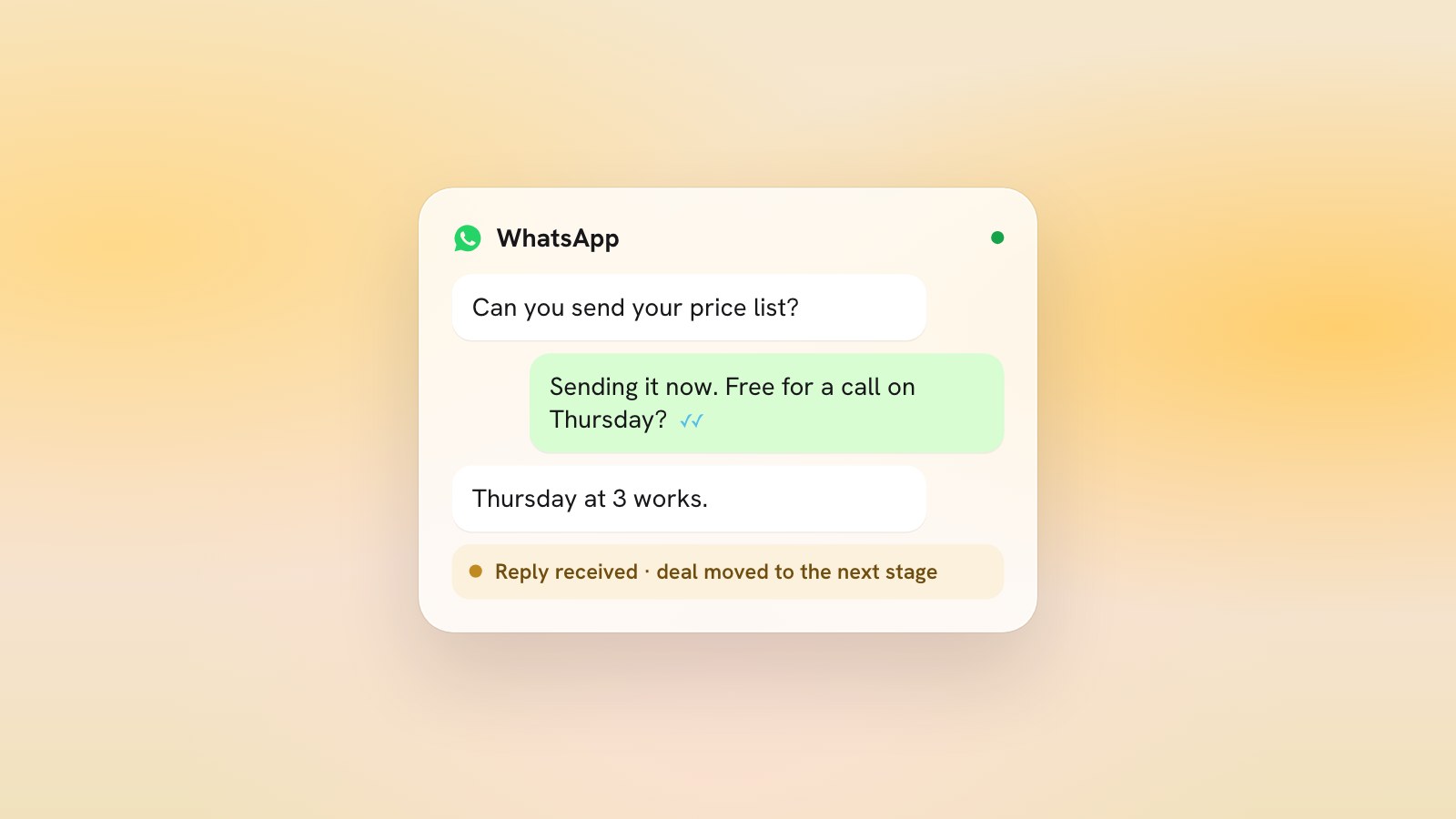
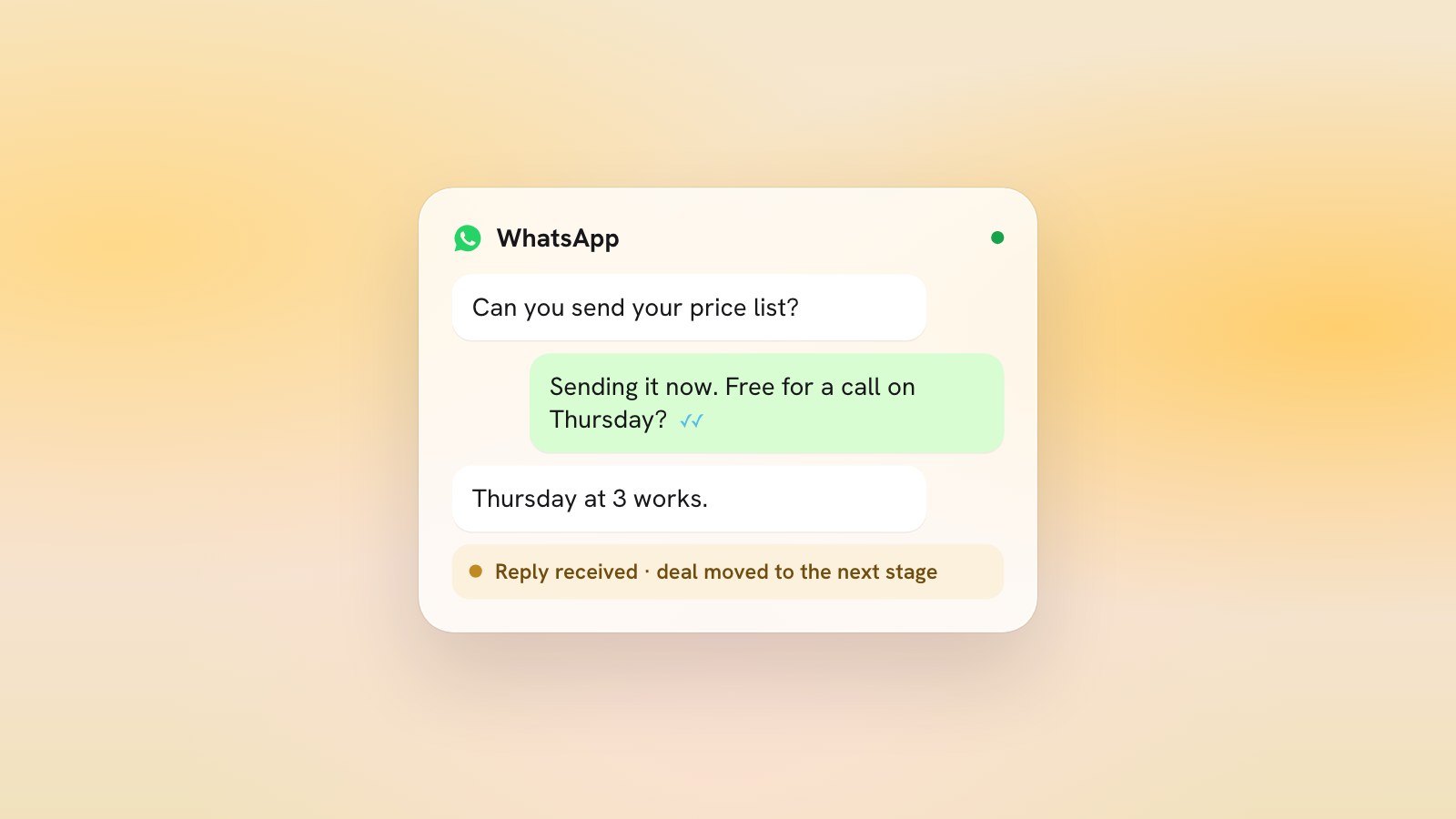
On WhatsApp, a short message with one clear question is usually enough to find out where a deal stands. Remember the timing rule if your team works through the WhatsApp Business Platform: once 24 hours have passed since the customer's last message, Meta's business messaging policy allows only an approved template, so keep one ready for reopening quiet deals. Our guide to WhatsApp follow-ups has wording you can adapt.
How do you define each stage?
"Quote" should mean the same thing to every person on the team. Write one line for each stage that says what must be true before a deal moves there. For example:
- Contacted: you have spoken to someone at the company, and they know why you called.
- Qualified: the company fits your profile, and a decision-maker has agreed to talk.
- Quote: the customer has a price in writing and knows what is included.
- Negotiation: the customer has asked for changes to the price, the scope or the terms.
- Won or Lost: a signed order or a clear no, with the reason recorded.
Payment terms deserve a line of their own, because they can stall a deal that has already agreed on price. In Lebanon, agree whether the customer will pay in fresh dollars, by bank transfer or in cash, or through Whish or OMT, before a deal reaches Negotiation. In the UAE, confirm the payment method and terms, and whether your price includes VAT, before the quote goes out.
When the definitions are written down, a disagreement about a stage becomes a quick check against one line instead of a debate.
When should a deal be marked lost?
Marking a deal lost feels like failure. Leaving it open is worse, because it hides the real picture and keeps people chasing it. Agree a rule in advance, for example: three follow-ups over two weeks with no reply, or a clear no, closes the deal.
Then record why, from a short fixed list:
- Price
- No budget
- Chose a competitor
- No response
- Timing
- Not a fit
- Payment terms
After a few months, those reasons become one of the most useful reports you have. Many "Not a fit" losses mean your lead scoring is letting the wrong companies through; many "Timing" losses are deals to revisit next quarter, with a task and a date.
When should you hold the review?
Hold it at the same time every week, at the start of the week, so its priorities shape the days that follow. Monday morning works in both markets. In Lebanon, the week runs Monday to Friday, with many offices also open on Saturday mornings. In the UAE, the federal government moved to a Monday-to-Friday week with a Saturday and Sunday weekend on 1 January 2022, according to the UAE government portal, and Friday is a short working day there.
If your team covers both markets, mind the clock: Dubai is two hours ahead of Beirut in winter and one hour ahead in summer. A 9:30 review in Beirut in November starts at 11:30 in Dubai, so a colleague based in the UAE already has half a morning of replies to report.
Keep it short and keep the format the same. A review that changes shape every week becomes a meeting people prepare speeches for, and the deals get less attention, not more.
What should the review produce?
Three things, written down before anyone leaves:
- A dated next step, with an owner, on every open deal.
- The three deals to push this week, and what each one needs.
- The deals closed as lost, each with its reason.
Thirty minutes a week on the pipeline saves a surprise at the end of every quarter.
How does a CRM shorten the review?
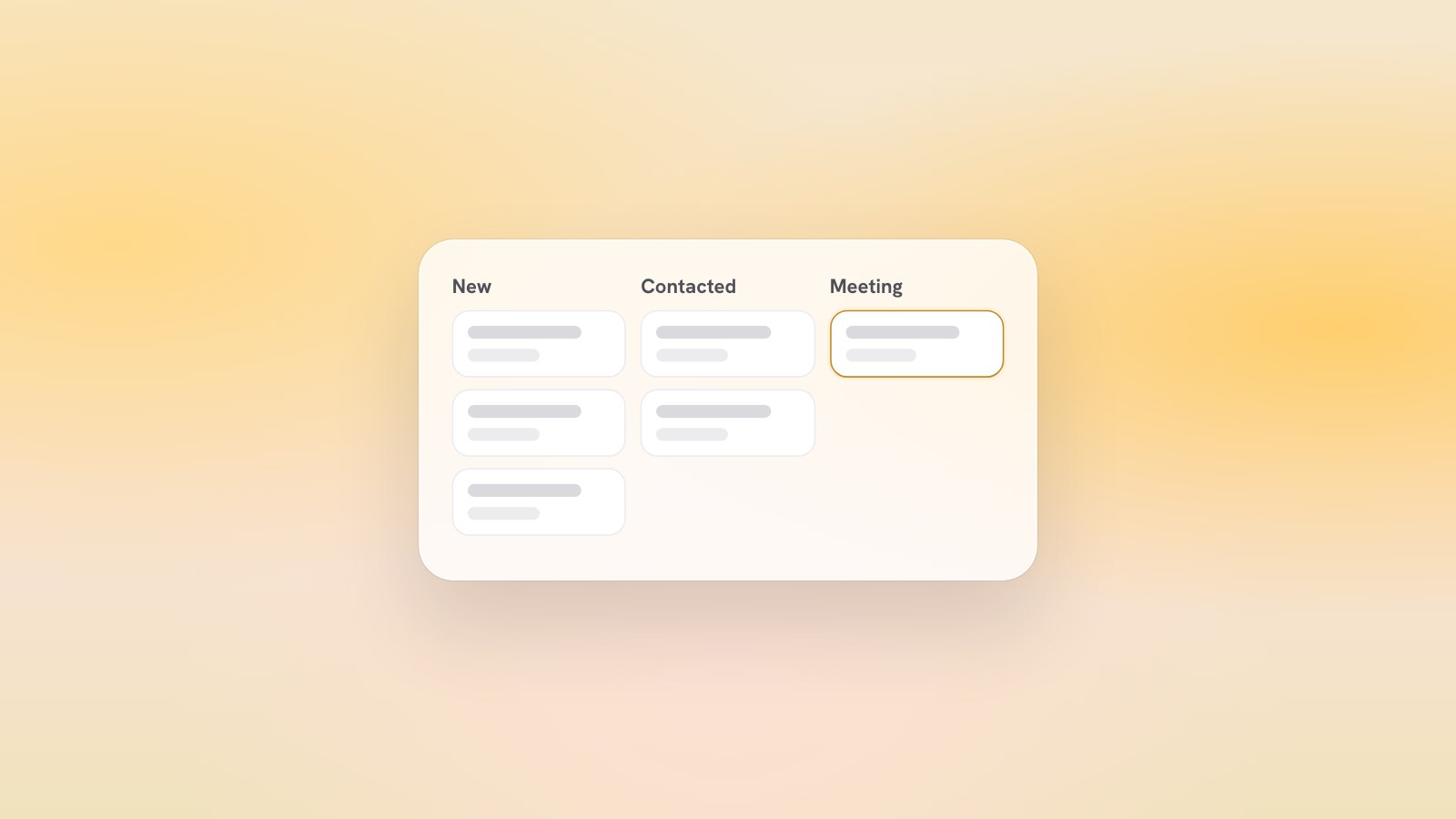
The review is quicker when the pipeline board is the agenda. In LeadsMind, deals sit on a board by stage, each with its own tasks and notes, next to the contact's shared timeline and WhatsApp conversation, and a WhatsApp reply on a deal can move it to the next stage automatically, under a rule you can edit. The review then checks what moved and why, rather than collecting updates from memory. After a call, the AI drafts the call log and suggests the follow-up task, so next steps arrive with dates. See how the WhatsApp CRM works.
FAQ
How long should a weekly pipeline review take?
Thirty minutes for a small team. If it regularly runs over, close or move back the stale deals before the meeting rather than making the meeting longer.
Who should attend the pipeline review?
Everyone who owns open deals, plus whoever runs sales. Keep it to people with deals to report; it is a working session, not a presentation.
What is the difference between a pipeline review and a sales forecast?
The review checks that every deal is real and has a next step; the forecast estimates what will close, and when. A forecast built on a pipeline nobody has reviewed is guesswork.
How many stages should a B2B sales pipeline have?
Four or five open stages, plus won and lost, is enough for most small teams. More stages mean more arguments about where a deal belongs.
To run this review on a WhatsApp-first pipeline with your own deals, start at leadsmind.ai/start.