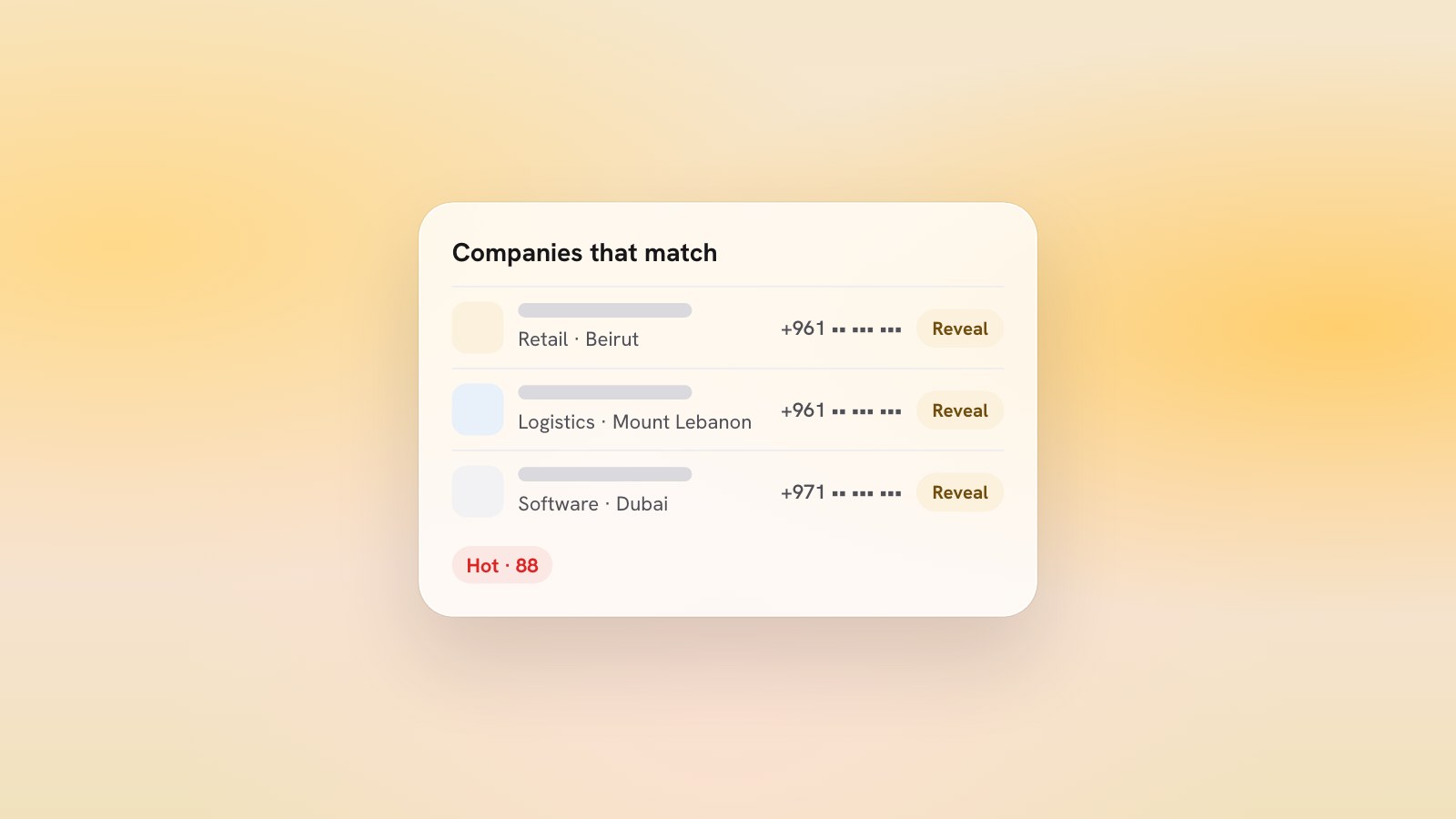
Lead scoring explained: hot, warm and cold leads, and who to call first
What hot, warm and cold mean on a scored lead, how a score is worked out from your ideal customer profile, and who your team should contact first each week, in Lebanon and the UAE.
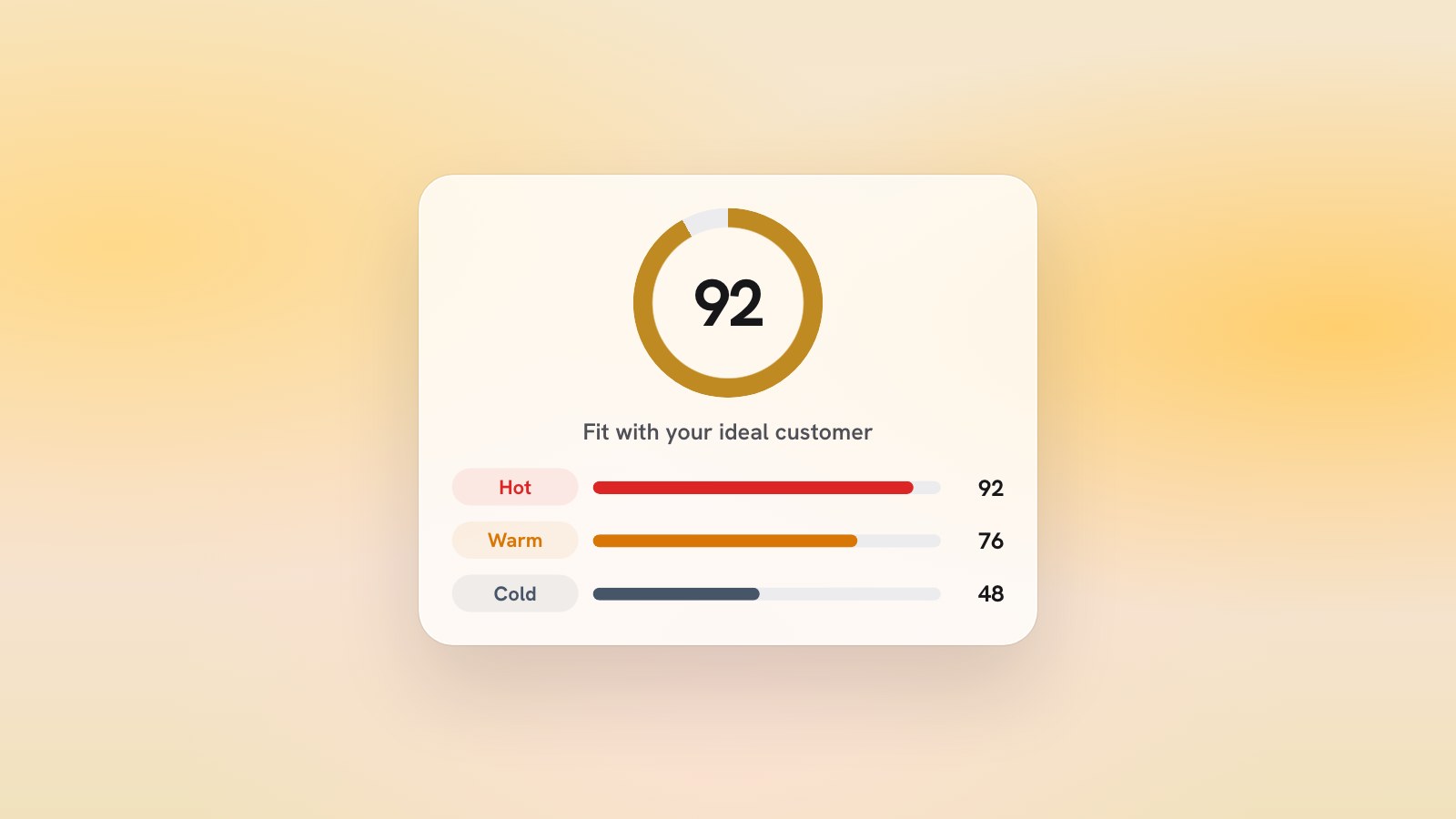
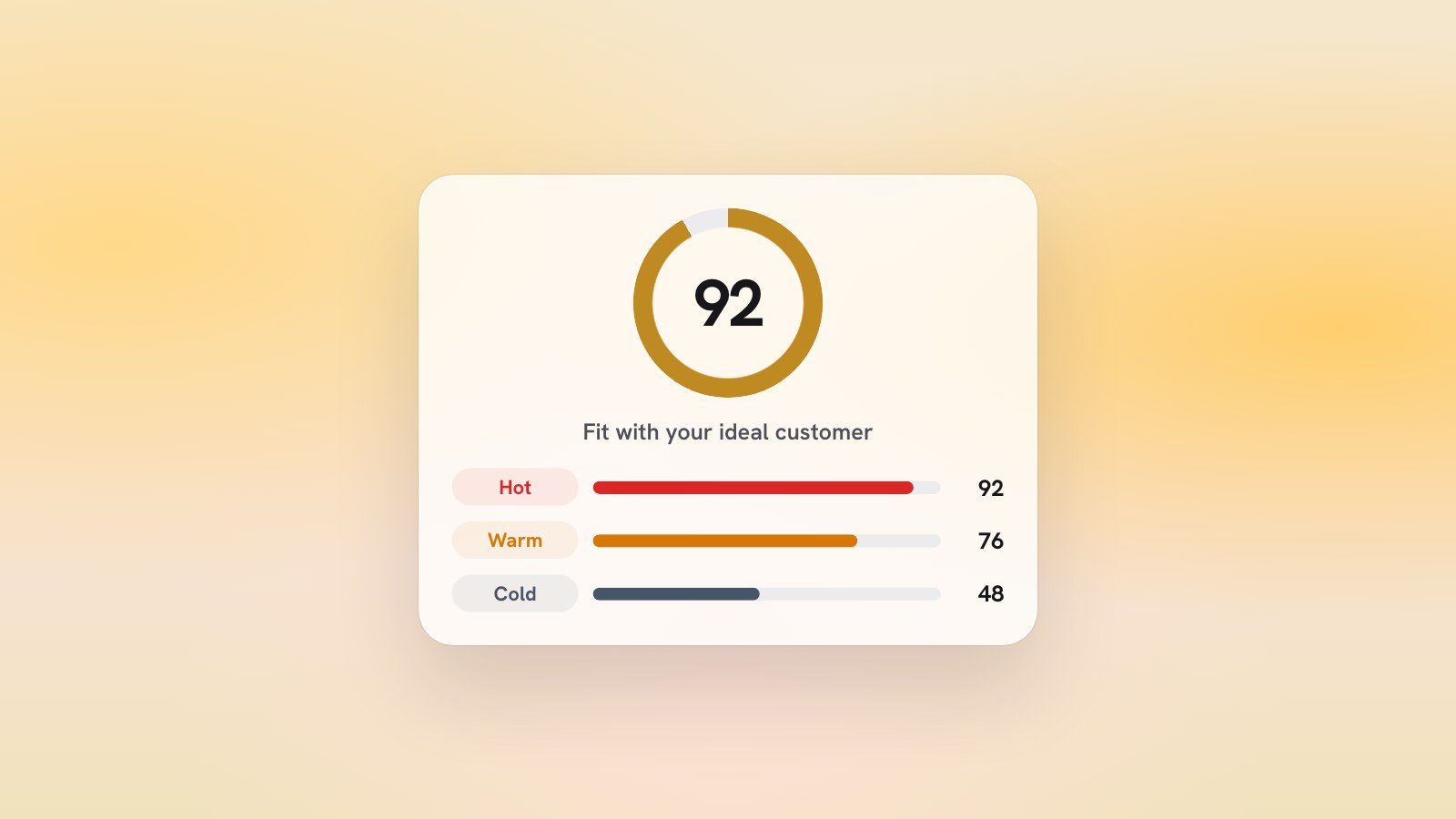
Lead scoring gives every prospect a number, usually from 0 to 100, for how closely it matches your ideal customer, so your team contacts the best-fit companies first. A hot lead is worth contacting this week, a warm lead deserves a planned follow-up, and a cold lead waits until your profile or its situation changes.
Not every lead deserves the same attention. The score turns what you know about a company, and about the person you would contact there, into a single number; the label turns that number into a decision your whole team makes the same way.
Where does a lead score come from?
There are two kinds of lead score, and B2B teams prospecting in Lebanon and the UAE mostly need the first.
- Fit measures how closely a company and a person match your ideal customer profile: industry, size, location, the role of the contact, and signals such as a website or a mobile number.
- Engagement measures what a lead has done: opened an email, visited your pricing page, booked a demo. It suits inbound marketing, but outbound prospecting starts with companies that have not engaged with you yet, so there is nothing to measure.
A fit score has two layers. The company comes first: does it do what your best customers do, in places you serve, at a size that can afford you? Then the person: is this the owner or the general manager, or someone three levels below the decision? A great company reached through the wrong person is a warm lead at best.
Good scoring also separates rules from judgement. Rules are hard gates that remove a company outright, such as an excluded sector, or a technology the company must use but does not. Judgement is the sliding part: how well everything else fits. Mixing the two is how a company you cannot serve ends up at the top of the list.
Score only on what you can see. Headcount and revenue are rarely published for smaller Lebanese firms, so a profile that leans on them scores most companies on guesswork. Category, city, branches, a website and a mobile number are visible for most companies you will contact, in Beirut or in Dubai, and they make a sturdier score; a decision-maker's title, when you can find one, sharpens it.
What do hot, warm and cold mean?
The labels only work if everyone uses the same thresholds. In LeadsMind they are fixed, and you set one number yourself: the minimum score for each profile.
| Tier | Score (0 to 100) | What to do |
|---|---|---|
| Hot | 85 or more | Contact this week |
| Warm | 70 to 84 | Plan a follow-up and keep them on a live list |
| Cold | Below 70 but above your minimum | Keep on file and look again at your next review |
| Low fit | Below your minimum | Off the list |
Because every lead is measured against the same profile, two people looking at the same company reach the same number, and the conversation moves from "I have a good feeling about this one" to "what does the profile say?"
A worked example
Say a Beirut marketing agency's best clients are restaurant groups with three or more branches, and the person who signs is usually the owner or the general manager. Its profile puts multi-branch restaurant groups at the centre, the owner or general manager as the contact, Beirut and Mount Lebanon as the main region, and a minimum score of 50.
- A four-branch restaurant group in Beirut, with the owner as the contact, matches everything that matters. It scores in the 90s and is hot.
- A two-branch café in Jounieh, reached through its operations manager, matches the industry but not the size or the role. It lands in the 70s and is warm.
- A single bakery in Zahle matches the industry and little else. It scores in the 50s or 60s and is cold.
- A car dealership scores below 50 and is marked low fit, so it drops off the list.
Now say the agency opens in Dubai and writes a second profile for the UAE. A three-branch restaurant group in Dubai, reached through its marketing manager, might score warm on that profile, while the Lebanese profile would rank it low for being outside its region. One profile per market keeps both lists honest.
The numbers are illustrative; your own profile decides the real ones.
What should you do with each tier?
- Hot: contact this week. Call first. If the conversation moves to WhatsApp, ask before it does: Meta's WhatsApp Business Messaging Policy allows businesses to message only people who have given them their number and agreed to receive their messages. Our guide to WhatsApp follow-ups covers the rules and the timing.
- Warm: plan it. Keep them on a list that updates itself as scores change, and work through it once the hot leads are done. A warm lead often turns hot when you find the right person to speak to.
- Cold: keep on file. Do not delete them. Look again when you review your profile, or when something changes, such as a new branch or a new manager.
- Low fit: let go. Time spent here is exactly what scoring exists to prevent.
Mind the working week too. In Lebanon the week runs Monday to Friday, and many offices also open on Saturday mornings; in the UAE it runs Monday to Friday. Call hot leads early in the week, so there is time for a follow-up before the weekend.
How do you keep scores honest?
A score is only as good as the profile behind it. Three habits keep it honest:
- Review the profile every quarter. Compare the scores of the deals you won with those you lost. If won deals keep scoring warm, the profile is missing something they share.
- Change the profile, not single scores. Overriding one company's score by hand breaks the "same company, same number" rule. Fix the profile and let everything be scored again.
- Write down why hot leads did not buy. A pattern in the reasons, such as price or timing, is either a new exclusion or a sales problem, and both are worth knowing.
In LeadsMind, an AI model judges each company's fit against your profile as written, rule checks apply your exclusions and required technologies, and editing the profile re-scores the companies in the background while live lists pick up the new matches. See how lead scoring works.
Do you need software for lead scoring?
Not for your first hundred leads. A spreadsheet with two lists, must-haves and nice-to-haves, gets you most of the way: remove anything that fails a must-have, add a point for each nice-to-have, and sort from the top.
It stops working when the list grows past what one person can read, when several people score the same companies differently, or when you want scores to change as the companies themselves change: a new branch, a new website, a new manager. That is the point at which a tool earns its place.
FAQ
What is a good lead score?
It depends on the scale and your thresholds. On a 0 to 100 fit scale, 85 and above is a strong match worth contacting now, 70 to 84 is a good match, and anything lower deserves less of your time.
What is the difference between lead scoring and an ideal customer profile?
The ICP describes the company you want; lead scoring measures how close each real company comes to it. Write the profile first, then score against it.
Should I delete cold leads?
No. Keep them, but do not spend this week on them. Profiles change and companies change, and a cold lead can become warm when either does.
How often should lead scores change?
Whenever the profile changes or the company does: a new branch, a new website, a new decision-maker. A score that never moves usually means a profile nobody is reviewing.
To see how companies in your market score against the ideal customer drafted from your website, start at leadsmind.ai/start.