How to find B2B leads in Lebanon and the UAE
Where Lebanese and UAE companies publish themselves, how to turn your three best clients into a profile, which signals to filter on, and how to move from a first call to WhatsApp without breaking Meta's rules.
To find B2B leads in Lebanon, start where companies already describe themselves in public: their Google Maps listings, their own websites, LinkedIn, and the chambers, associations and events they belong to. Then keep only the companies that look like your best clients, find the person who signs, and reach them by phone first, moving to WhatsApp only once they agree.
Finding clients in Dubai and the rest of the UAE works the same way, with three differences: English is the default language of a first call, the free zones add a second layer of companies, and a federal licence register lets you check who a company is before you dial. This guide covers B2B lead generation in both markets, step by step.
Start with the three clients you would most like to clone
Every useful lead list starts from a short description of who you sell to, and the quickest way to write one is to look at your three best clients. For each, note:
- The sector, in the words the market uses: "pharmacies", "aluminium and glass contractors", "restaurants that deliver", rather than "healthcare SMEs".
- The place: Beirut, Mount Lebanon, the North, the South or the Bekaa in Lebanon; Dubai, Abu Dhabi, Sharjah or the Northern Emirates in the UAE.
- Who signed: the owner, a general manager, a procurement head or an IT manager. This becomes the title you search for.
- How you won them: an introduction, a call, an event, a tender. A channel that worked once is worth trying again.
- What made them a good client: they paid on time, they reordered, they referred someone.
That description is your ideal customer profile. Keep it to one paragraph. If it takes a page, you are describing two different customers and need two lists. Our guide to lead scoring explains how to turn the profile into a score from 0 to 100, so the companies that fit best rise to the top.
Where B2B leads come from in Lebanon
Companies in Lebanon are easier to find than many sellers assume, because most of them want customers to find them. The useful sources are:
- Google Maps listings. Shops, clinics, workshops, agencies and distributors list their category, town, opening hours and a phone line, and many add a website. It is the natural free starting point for a local list. Treat the number as the company's line, not as a personal contact.
- Company websites. The About and Contact pages often name the owner or manager, list the brands a distributor carries, or show a careers page that tells you the company is hiring.
- LinkedIn. Strong for agencies, software houses, banks, insurers and larger distributors. A small family business may have no company page at all, so do not judge a sector by LinkedIn alone.
- Chambers, associations and sector events. The regional chambers of commerce and the trade associations run workshops, fairs and member events. An introduction from someone you met there turns a cold call into a warm one.
- Referrals. Ask every satisfied client for two names in their own sector. In a market that runs on relationships, an introduction is the warmest start a call can have.
Split the list by region before anyone calls. A rep covering Beirut and Mount Lebanon can see several clients in a day, while a lead in Akkar or the Bekaa needs its own plan. Language matters too: a call can start in Arabic, move to French and close in English, so open in the language the person answers in and follow them when they switch. Our Lebanon page covers the sectors and regions you can filter there.
How to find clients in Dubai and the rest of the UAE
The UAE has two kinds of company that Lebanon does not separate: mainland companies, licensed by each emirate, and free-zone companies, licensed by the zone they sit in, such as DMCC, DIFC, JAFZA or Dubai Silicon Oasis. The sources shift accordingly:
- Google Maps and company websites work as they do in Beirut, and almost everything is in English.
- LinkedIn is usually the quickest way to find a name and a title inside a Dubai company, from a ten-person agency to a regional distributor. Write and call in English unless the buyer prefers Arabic.
- The licence registers. The federal National Economic Register lets you look up economic licences, licensed activities and trade names. Use it to check that a prospect is licensed for what you think it does. It is a check, not a contact list.
- Events. Trade shows at the Dubai World Trade Centre and the free zones' own events put buyers in one room. Book meetings before the show, and ask for permission to follow up on WhatsApp while you are standing in front of the person.
The working week runs Monday to Friday, as it has since 2022, so plan call blocks for weekday mornings and leave Friday around midday prayers free. One honest note for UAE teams: the LeadsMind company database is strongest in Lebanon and is still growing in the UAE, so for Dubai prospects you can import your own contact list by CSV, with English or Arabic headers, and work it in the same CRM and WhatsApp inbox. The UAE page explains what works there today.
Qualify the list before anyone picks up the phone
A list of 400 companies is not 400 leads. Before you call, remove the ones you cannot serve and sort the rest by fit. The signals worth filtering on are simple:
| Signal | What it tells you |
|---|---|
| Has a phone | You can call the company line today |
| Has a mobile | The number can usually take WhatsApp, once you have permission |
| Has a website | You can read what they sell before you call |
| People found | You have a name and a title, not just a switchboard |
| Recently discovered | A new company, or one that has only just appeared online |
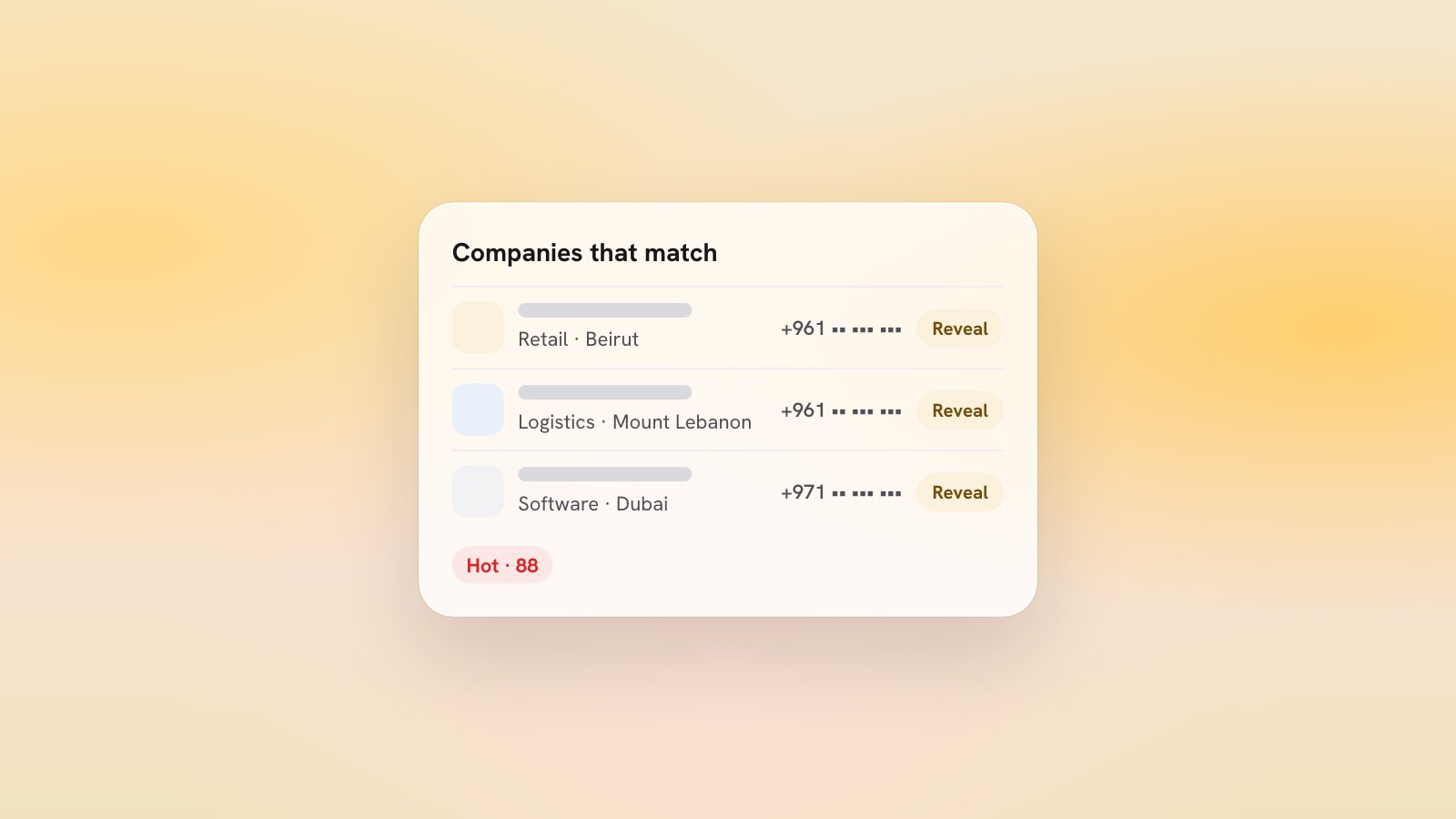
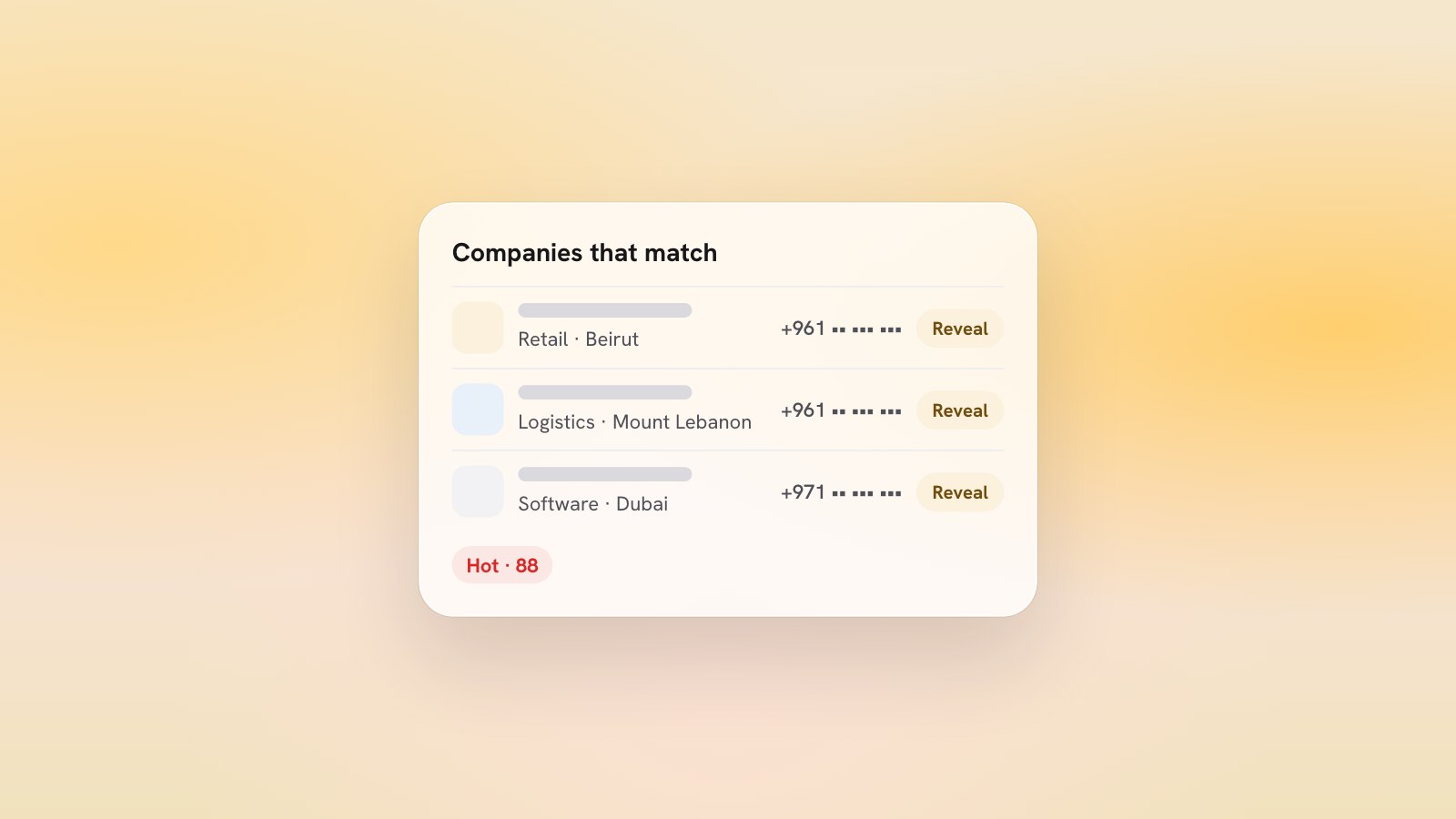
Then score what is left against your profile. In LeadsMind, every company and lead gets a score from 0 to 100: 85 and above is hot, 70 and above warm, the rest cold, so the team calls the hot ones first, and a list built on the score adds new matches by itself. The page on our B2B leads database shows where the companies come from and how each filter works.
Make the first contact: phone first, WhatsApp after a yes
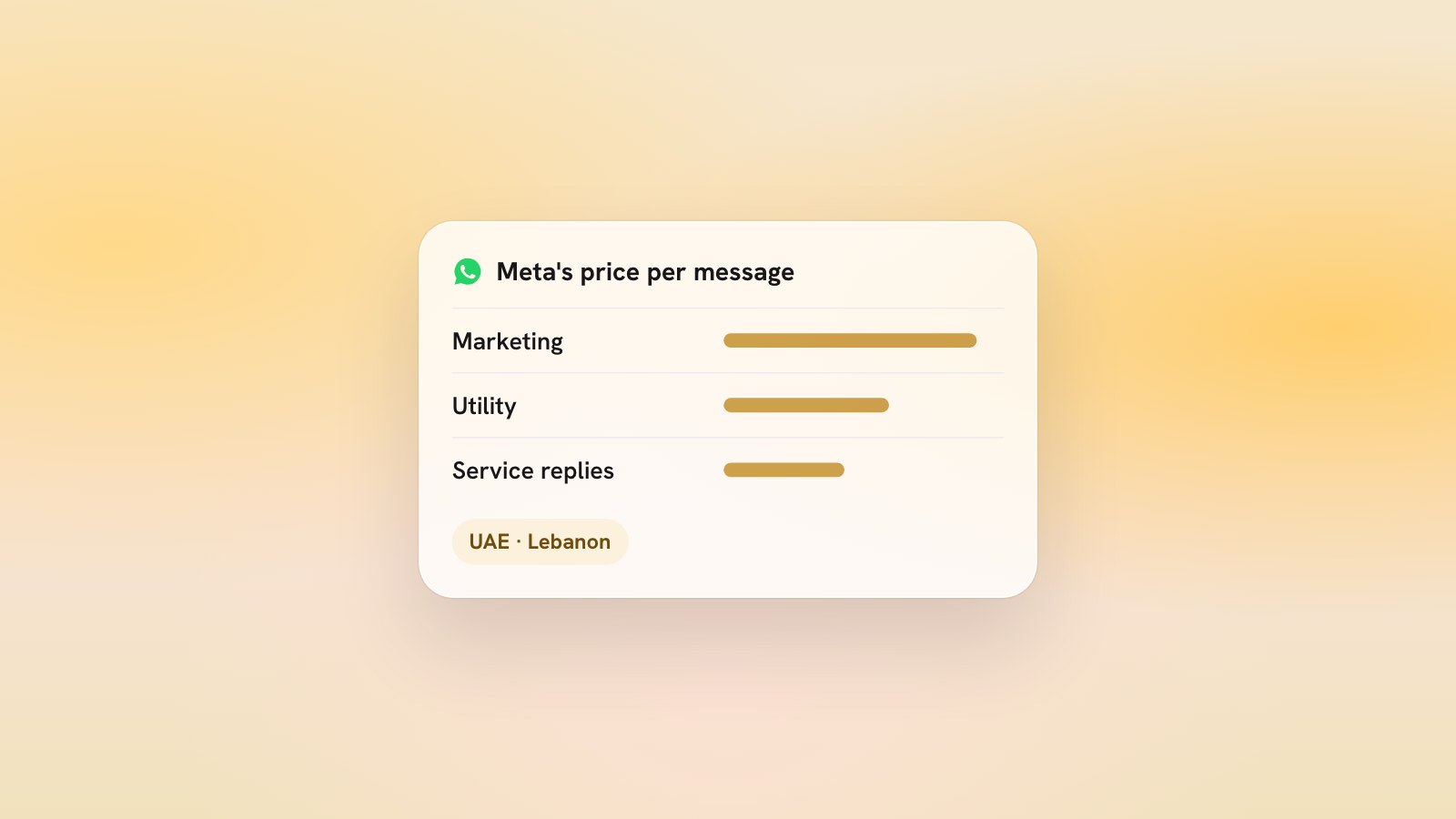
A company's number on Google Maps is not permission to message it on WhatsApp. Meta's WhatsApp Business Messaging Policy says you may only contact people who have given you their number and from whom you have "received opt-in permission" to hear from you. A cold WhatsApp to a stranger also invites blocks and reports, and Meta says it rate-limits businesses whose quality stays low for a sustained period.
So the order of work is:
- Call the company line in business hours. In Lebanon that means Monday to Friday, and many offices are also open on Saturday mornings; in the UAE, Monday to Friday.
- Introduce yourself and ask for two minutes: who you are, why you are calling this company, and whether now is a good time.
- Ask three questions about how they buy today, who signs and where things get stuck. Type the answers on the contact while they talk.
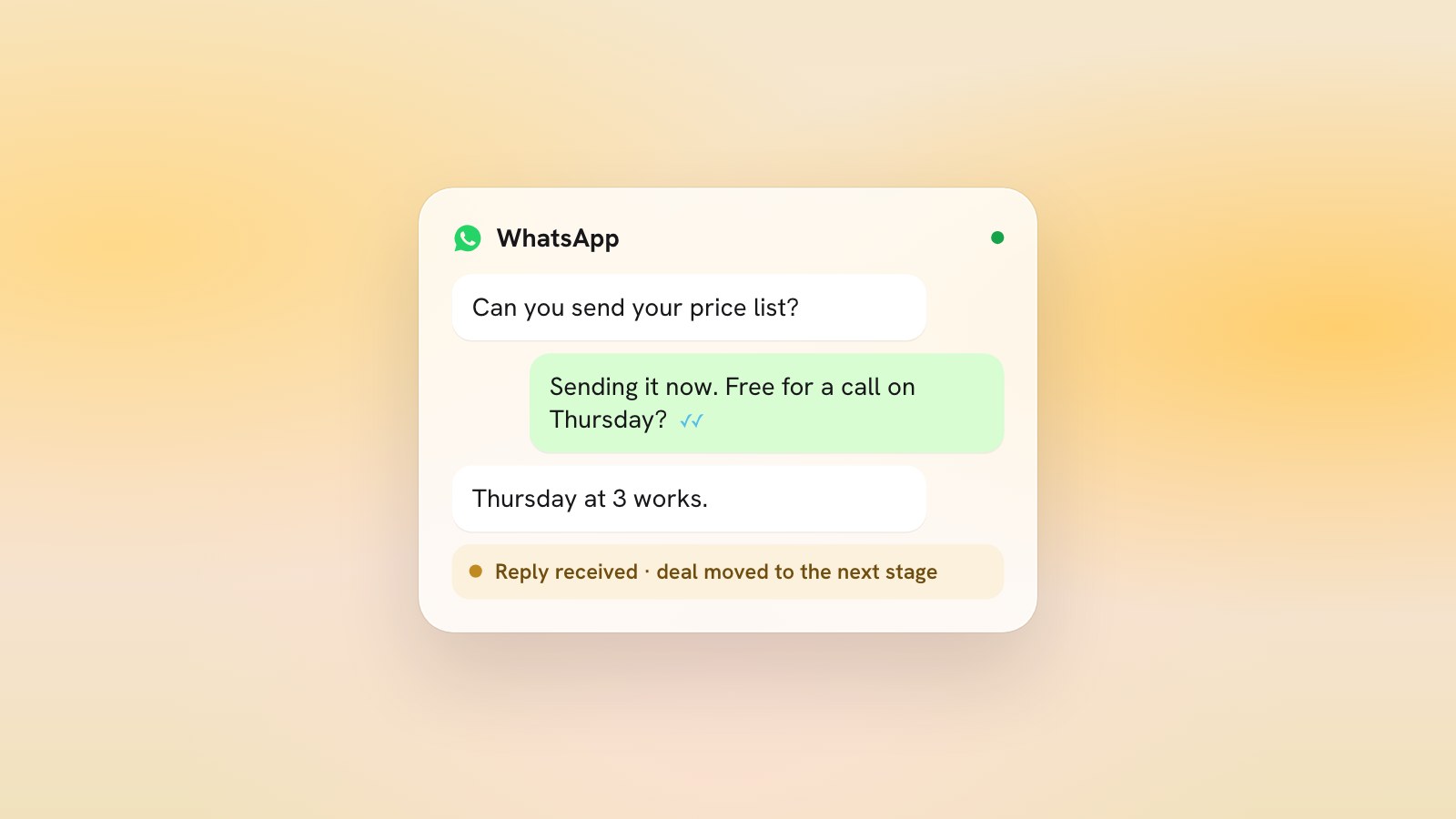
- Close on a time for a proper meeting, then ask: "Can I send you the details on WhatsApp, on this number?" Meta leaves the method of opt-in to the business, as long as the person clearly agrees to hear from you by name, so a clear yes at the end of a call, noted on the contact with the date, is the simplest record to keep.
- Send the first WhatsApp the same day, with your name and your company's name in the first line, the meeting time, and a way to opt out.
Keep the list alive
A lead list starts going stale the day you build it: companies open, move, change numbers and close. Three habits keep it useful:
- Save the search, not just the file. Re-run it every month, or use a list that adds new matches by itself, so new companies reach your team before other suppliers call them.
- Log every touch. A call, a WhatsApp, a visit: one line on the contact, with the next step as a dated task. If it is not written down, it is lost the day the rep leaves.
- Review the pipeline weekly. Thirty minutes on the same day each week: which deals moved, which are stuck, and which leads have had no touch in ten days.
The best list is short, scored and owned: every company on it has a reason to be there and a person on your team who will call it this week.
FAQ
Where can I find B2B leads in Lebanon for free?
Google Maps listings, company websites, LinkedIn, chamber events and referrals from your own clients cost nothing but time. Paid tools save that time by collecting the same public sources in one place and scoring them against your profile.
How do I find clients in Dubai as a new company?
Start with your own network and ask for introductions, use LinkedIn for names and titles, check each prospect's licence on the National Economic Register, and go to the trade shows your buyers attend. Then call first, and follow up on WhatsApp once they agree.
Is lead generation in Dubai different from Beirut?
The method is the same: a clear profile, a scored list, a call, then WhatsApp with permission. What changes is the language of the first call, the working week (Saturday mornings matter in Lebanon, not in the UAE) and the sources, with free zones and licence registers playing a bigger part in the UAE.
Can I send a WhatsApp to a business number I found online?
Not as a first touch. Meta's policy requires opt-in permission before you message someone, and a public listing is not permission. Call first, ask, and note the yes on the contact.
Want a scored list for your own sector? Type your website at leadsmind.ai/start: LeadsMind drafts your ideal customer and shows the companies in your strongest segment that have a number on their listing, with no sign-up to preview.