Companies in Beirut: how to prospect by area, from Hamra to Dbayeh
A practical guide to finding and visiting companies in Beirut: what to expect in each area, from Hamra and Downtown to the Mount Lebanon belt of Sin el Fil, Jal el Dib, Dbayeh and Hazmieh, plus office hours, holidays and building the list.
To prospect companies in Beirut, split the city and the suburbs around it into areas your team can cover in one trip, such as Hamra, Downtown, Achrafieh and Badaro inside the city and Sin el Fil, Jal el Dib, Dbayeh and Hazmieh in the Mount Lebanon belt, then call first and visit by area. Build the list one sector and one area at a time, so each trip across town serves several meetings.
Beirut itself is small: IDAL, the government's investment agency, gives the governorate an area of 19.8 km² on its Beirut page. What limits a day of visits is traffic, parking and finding the right floor of the right building, not distance. This guide covers what to expect in each area, when to call and when to visit, and how to build the list.
What kind of companies are in Beirut?
IDAL describes Beirut's economy as based on services, mainly financial services, and says more than 58% of Lebanon's software development and IT services companies are in the city, alongside more than 400 industrial firms; the page gives no year for these figures. It also lists the Beirut Digital District, a business park for local and foreign technology companies.
Much of the country's industry sits just outside the city. IDAL's Mount Lebanon page puts 58% of Lebanon's industrial firms in that governorate (2015–2016 data, counting firms with more than eight employees) and counts more than 12 industrial zones there. A Beirut list that stops at the city's edge misses most of the industry next door.
If you are planning the whole country, our page on selling in Lebanon covers the other regions and why selling there runs on relationships and WhatsApp.
Prospecting Beirut area by area
Think in clusters you can reach without crossing the city twice.
Inside the city
- Hamra and Ras Beirut, in the west around the American University of Beirut: shops, hotels, restaurants, clinics and offices, close enough together to walk between calls.
- Downtown, the Beirut Central District around Parliament and the Grand Serail: head offices, banks and professional firms. Book ahead, and allow time for security at building entrances.
- Achrafieh, in the east, with Gemmayzeh and Mar Mikhael on its northern edge: offices, clinics, schools and shops, plus restaurants and studios in Gemmayzeh and Mar Mikhael. Parking is tight, so plan one street at a time.
- Badaro, by the National Museum and the courts: office buildings, cafés and restaurants, a short drive from both Achrafieh and Hazmieh.
- Verdun, in west-central Beirut: shopping streets and office towers, easy to pair with Hamra.
The Mount Lebanon belt
- Sin el Fil, just across the Beirut River to the east: office buildings and commercial streets, easy to pair with Achrafieh.
- Zalka, Jal el Dib, Antelias and Dbayeh, along the coastal highway north towards Jounieh: shops, showrooms, malls and offices. Travel against the rush hour, or start early.
- Hazmieh and Baabda, to the south-east: offices and services, with Baabda the governorate's administrative centre.
- Industrial areas such as Mkalles to the east and Choueifat to the south: factories, workshops and warehouses, where a site visit counts for more than a call.
Strictly, these towns are not Beirut. Sin el Fil, Jal el Dib and Dbayeh are in the Matn district of Mount Lebanon Governorate, and Hazmieh is in the Baabda district. They are often counted as Greater Beirut, and they belong on the same list if your team covers them.
When to call and when to visit
Lebanon's working week runs Monday to Friday, and many offices also open on Saturday mornings. Ask about hours on the first call and note them on the company's record; a clinic, a showroom and a bank branch each keep their own.
- Call first. A short call finds the right person and books a time. Walking in works for shops and clinics with a front desk, much less for offices in towers, where reception will ask who you are there to see.
- Visit by cluster. Two meetings in Badaro and one in Hazmieh make a good morning; Hamra, then Dbayeh, then back to Hamra makes a lost one. Leave a buffer between meetings in different areas, because the roads into the city slow down at rush hour.
- Confirm the building and floor. Beirut addresses often go by building name, floor and nearest landmark rather than a street number, so check them the day before.
- Check the holiday list. Lebanon's official holidays, set by Decree 15215 of 2005 as amended and listed on the Ministry of Industry's holidays page, apply to public bodies, municipalities and private-sector institutions. They follow two calendars: Independence Day on 22 November, Christmas on 25 December, New Year's Day, Armenian Christmas on 6 January, Western and Eastern Good Friday, and two days each for Eid al-Fitr and Eid al-Adha, among others.
To confirm a visit with someone who has agreed to WhatsApp:
Hi [name], it's [your name] from [company]. Confirming our meeting at your office in [Badaro] on [Tuesday] at [11:00], for about 20 minutes. Is it still [building name, floor], and is there parking nearby?Leave a way back in. After a visit, hand over a card with a WhatsApp click-to-chat link or QR code, so the person can message you first when the need comes up; the WhatsApp link generator makes both.
How to build a Beirut prospect list
- Pick one sector and two or three neighbouring areas. Say you sell to dental clinics: Achrafieh and Badaro one week, Hamra and Verdun the next.
- Search Google Maps by category and area, such as "dental clinic Achrafieh", keep the listings with a phone, and drop any marked "Permanently closed".
- Note the building and floor for each company, and group the list by area into visit days.
- Find the person who decides: in a smaller firm, often the owner, the general manager or the office manager.
- Rank the list against your ideal customer profile, so the best fit gets the first calls. Our guide to building a prospect list of companies in Lebanon covers ranking and keeping a list current.
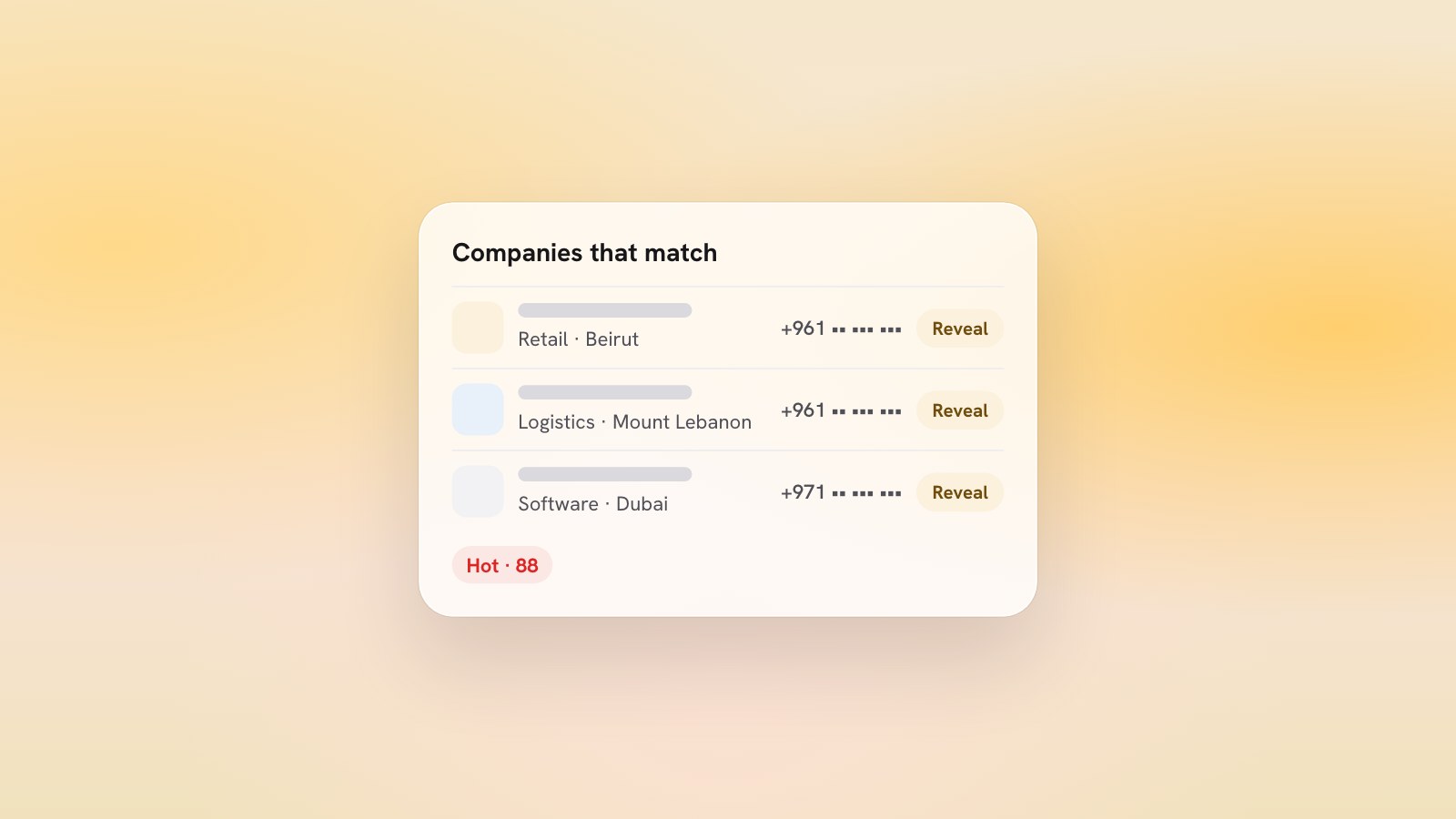
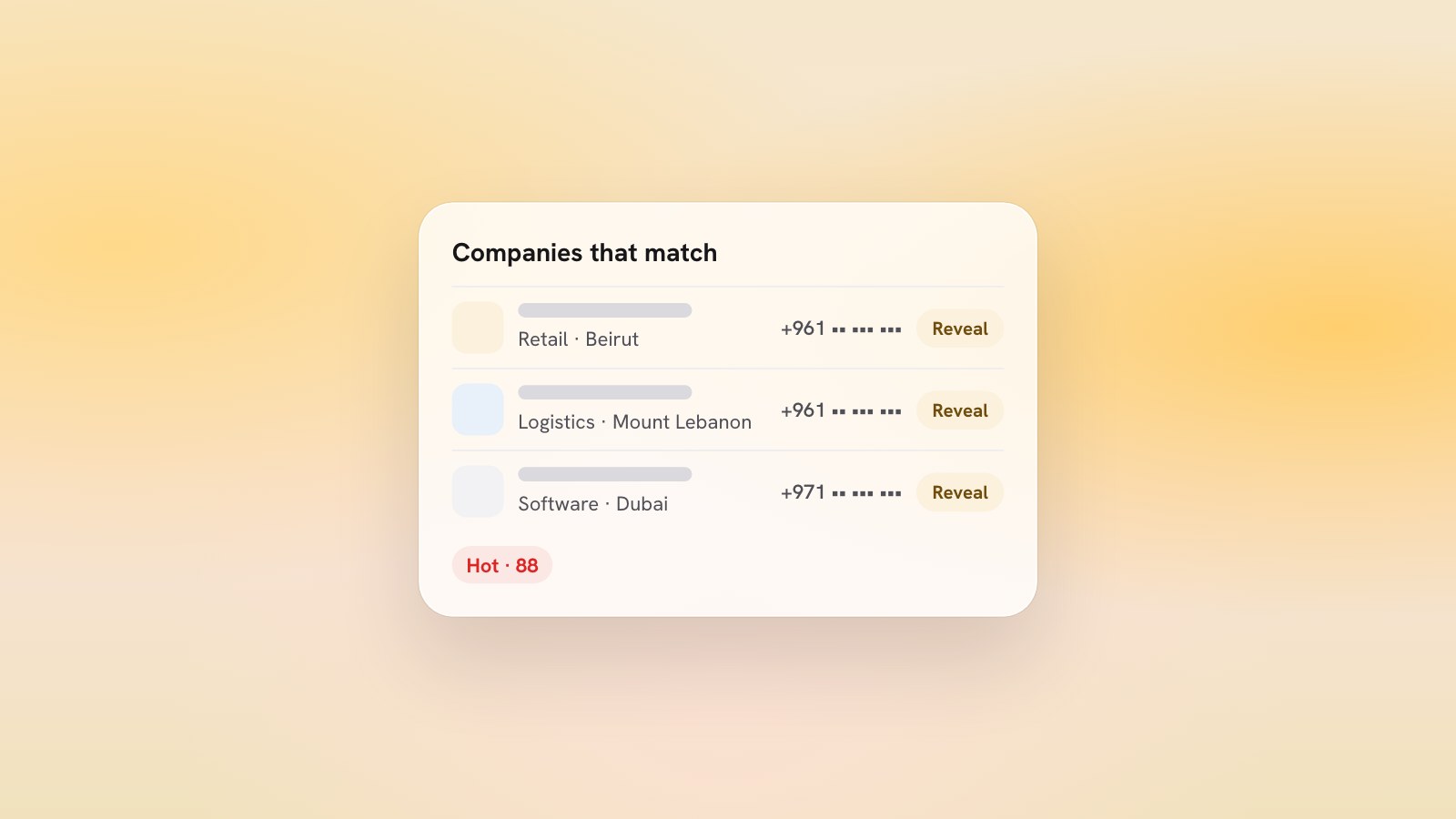
LeadsMind's company database is strongest in Lebanon. You can filter it by sector and by city or region, Beirut or Mount Lebanon towns such as Antelias, Dbayeh and Baabda, add signals such as has a mobile or has a website, and rank the results by fit score against your ideal customer profile. Addresses show without a reveal, so you can split a list by neighbourhood before you spend a credit on contact details. See how the B2B leads database works.
FAQ
Which areas should I prospect first in Beirut?
Start where your buyers are and where your team can visit. Downtown, Badaro and Achrafieh suit sellers to head offices and professional firms; Hamra, Verdun and Achrafieh suit sellers to shops, clinics and hospitality; the Mount Lebanon belt and its industrial areas suit sellers to showrooms, distributors and factories.
Are Sin el Fil, Hazmieh and Dbayeh part of Beirut?
Not administratively. They are in Mount Lebanon Governorate: Sin el Fil and Dbayeh in the Matn district, Hazmieh in Baabda. They are often counted as Greater Beirut, so include them on a Beirut list if your team covers them.
Are offices in Beirut open on Saturdays?
Many are, on Saturday mornings, but not all; the working week runs Monday to Friday. Ask about hours when you first call, and note them on the company's record.
Should I call or visit companies in Beirut?
Call first to find the right person and book a time, then visit by area, so one trip serves several companies. Confirm the building and floor the day before.
To see which companies LeadsMind would suggest for your offer, type your website at leadsmind.ai/start.