Following Up on Catering Enquiries Over WhatsApp: A Playbook for Beirut Restaurants
Catering enquiries are worth far more than a table for two, yet most go quiet after one reply. Here is how Beirut restaurants can turn WhatsApp enquiries into booked events with fast answers and a simple follow-up plan.
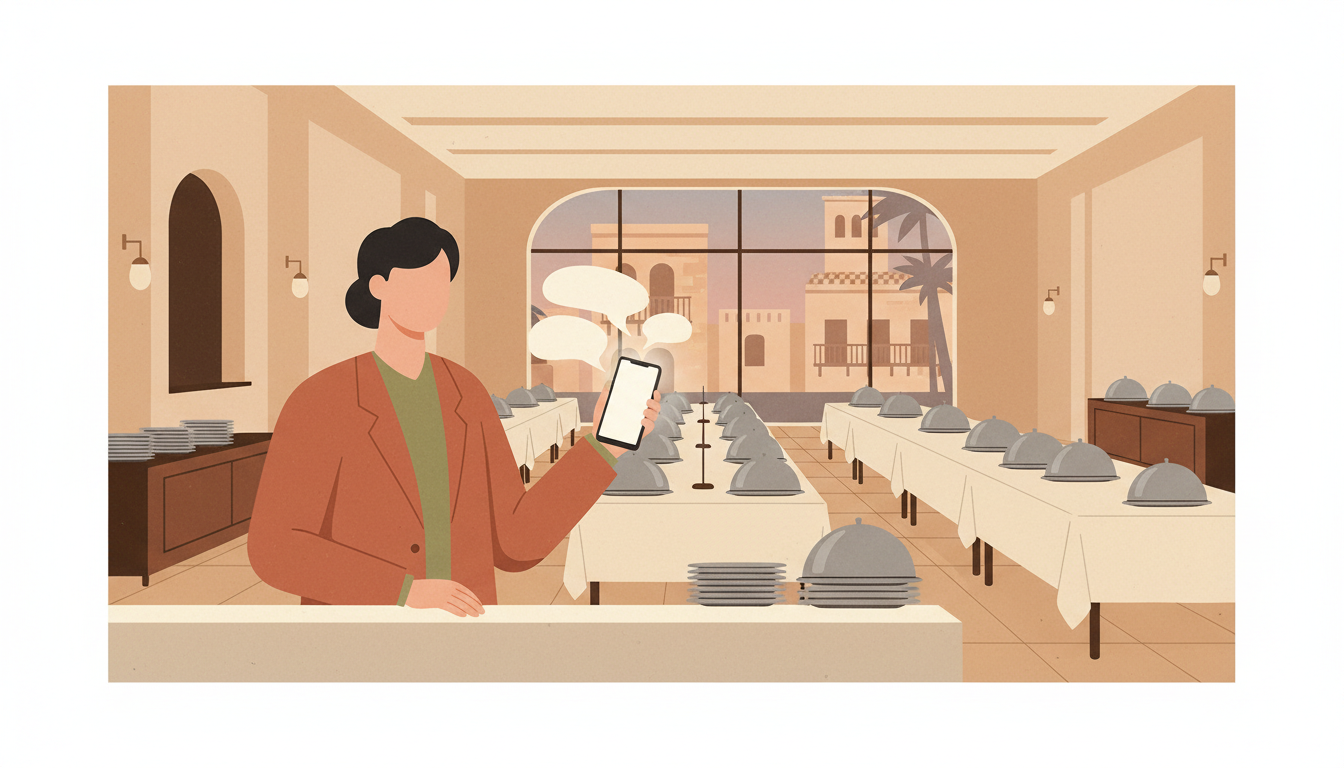
A catering enquiry is rarely just one meal. A company lunch for eighty, a wedding, an engagement party — these orders are worth many times an average table, and in Beirut they usually arrive on WhatsApp. The common pattern is familiar: someone replies once, sends a photo of the menu, then hears nothing. The enquiry goes quiet, the event date passes, and nobody knows whether the client chose another venue or simply forgot. A simple follow-up routine fixes most of that.
Why catering enquiries deserve their own follow-up
Catering is a different sale from a dinner service. The order is larger, more people are involved in deciding, and the client is working towards a fixed date. Someone planning a December staff party is comparing two or three venues in the same afternoon; the one who replies with clear options and sensible questions makes the decision easy.
There is also a deadline built into every enquiry. The client has to confirm numbers, agree a menu and pay a deposit before the date. If your follow-up drifts, you are not losing an argument — you are being forgotten while someone else stays in the conversation. Treat each enquiry as a deal with a deadline, not a message to answer when things are quiet.
Reply within minutes, with real questions
Speed matters because the first reply sets the tone. A client messaging three restaurants remembers the one that answered while the others waited until evening. Reply within minutes where you can, and never let an enquiry sit overnight without an acknowledgement.
But speed without substance wastes the advantage. “Sure, we do catering!” puts all the work back on the client. One good message should gather what you need to quote:
- The event date and start time
- Number of guests, and whether it is seated, buffet or mezze style
- On-site service, delivery or pickup
- A rough budget range, even a wide one
- Any dietary requirements
- Who decides, and by when
That last point matters more than it looks. If the client says they will decide by Thursday, your follow-up schedule now has an anchor.
Also match the client's language. Beirut conversations slide between Arabic, French and English, sometimes in a single thread — reply in whatever language they used.
Quote the same day, then follow up on a plan
Once you have the details, quote the same day. Send two or three options at different price points rather than a single number — people find it easier to reply to a choice than to a price. Note what each option includes so the client can forward it to others without extra questions.
Then follow up on a plan, not on memory:
- Same day: the quote, with one clear question (“Would the buffet or the plated menu suit you better?”)
- Next day: a short nudge if there is no reply
- Two or three days later: a check-in with something useful — seasonal availability, a suggestion for their headcount
- A few days before their decision date: a final message that makes confirming easy
For larger events, offer a tasting. It gives the client a reason to meet you, and it moves the conversation from price to experience.
Every follow-up should carry the conversation forward: a new option, a question to answer or a date to confirm. A message that only says “just checking in” does none of those things.
If a client says “we'll think about it”, ask which part gives them pause — menu, budget or date. You cannot fix a problem you have not named.
Write messages that get answers
The difference between a follow-up that gets a reply and one that gets ignored is usually specificity. Reference the client's event, the numbers you discussed and the decision they still need to make. Keep it short — and in a nudge, ask exactly one question, never a vague “checking in”.
Here is a first-reply template you can adapt. Save it, with Arabic and French versions, in the phones of everyone who answers the restaurant's WhatsApp:
Hi [name], thanks for thinking of us for the [event] on [date]! So we can send you options today:
- Roughly how many guests?
- Seated, buffet or mezze style?
- At our venue, delivered, or picked up?
And do you have a budget in mind, even a wide range?
A later nudge might look like this: Hi Sara, checking in on the team lunch for 40 on 12 December. Would the mezze spread or the plated menu suit you better? One message, one question, all the specifics they gave you. That is what gets answered between two shifts.
Keep every enquiry in one place
The most common way restaurants lose catering work is not a bad quote — it is a lost thread. The enquiry arrives on the phone of whoever answered, the manager is off the next day, and the follow-up lives in one person's memory. When that person is serving a full terrace, the enquiry waits.
Fix this with the simplest possible pipeline. Every enquiry becomes a card with the event date, headcount and contact name, moving through stages: enquired, quoted, tasting, booked or lost. The event date sits on the card, so follow-ups are scheduled against it, not against whoever remembers.
This also pays off months later. Company events repeat every year, and a family that booked an engagement dinner will plan weddings. A “not this time” in March is often a warm lead in November — but only if you kept the details.
If you want this structured in one place, a tool like LeadsMind lets you work each enquiry through a pipeline and follow up on WhatsApp from the same screen, which helps when two or three people share the enquiries.
Catering enquiries reward the restaurant that treats them like sales, not like messages. Answer in minutes, quote the same day, follow up against the event's timeline and keep every thread where the whole team can see it. None of this needs new equipment — just a saved template, an agreed cadence, and a place to track the date each event must be confirmed by. Do that consistently, and the enquiries you already receive will turn into the bookings you were going to chase anyway.